
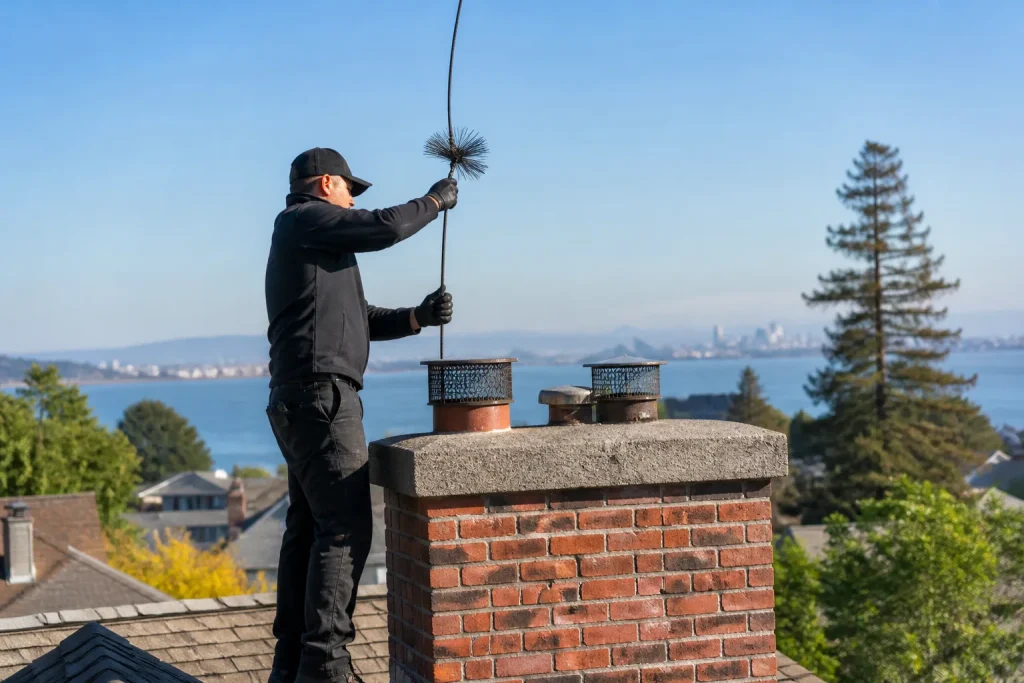
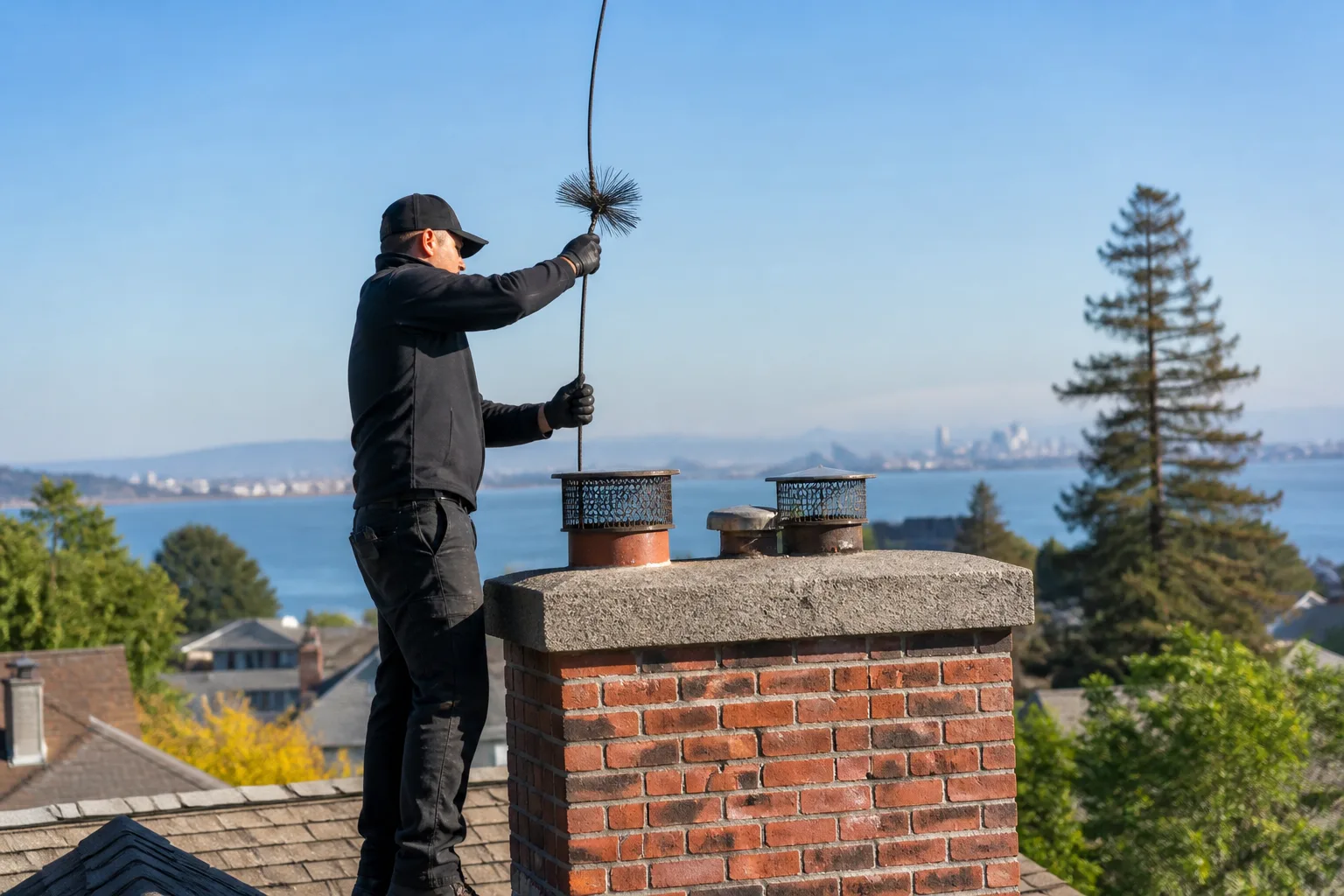
Famco Chimney Sweep in Alameda: A Homeowner’s Guide
FAMCO is one of the most recognized names in chimney caps, vents, and draft components, and chances are you’ve been looking at one on your Alameda roof for years without knowing it. The FAMCO cap sitting on your chimney was probably installed by a contractor who chose it for price, not fitment, because FAMCO makes over a dozen cap configurations and the wrong one for your flue geometry is nearly as bad as having no cap at all. This guide explains what FAMCO products do, how to spot common installation errors, and why Alameda’s salt air changes the maintenance equation entirely.
If you’d rather skip the detective work, call Ambassador Chimney Sweep home at (877) 752-4931 and we’ll evaluate what’s actually on your roof.
What FAMCO Actually Makes (and What Ends Up on Alameda Roofs)
FAMCO is a manufacturer, not an installer. They build caps, draft hoods, roof vents, and termination fittings out of galvanized steel, stainless steel, and copper. You won’t buy directly from them unless you’re a contractor with a supply house account. What that means for Alameda homeowners is simple: the FAMCO product on your chimney was selected by whoever built or repaired the chimney, and the selection process is where things go wrong.
The most common FAMCO caps we see on Alameda homes fall into a few categories:
- Single-flue caps (model families like the SC and LCA series), sized to sit over one clay tile liner. These are common on pre-1980s houses in the Gold Coast and East End neighborhoods.
- Multi-flue caps (covered top-mount units) that span the entire chimney crown. We see these on larger Victorians near Central Alameda where two or three flues share a single chase.
- Draft-inducing caps, which use venturi geometry to stabilize draw in windy conditions. Alameda’s flat, exposed marina-side blocks get steady afternoon wind, so these show up often in homes near the water.
- Clamp-on vent caps for gas appliances, which attach to B-vent terminations rather than masonry flues. These are everywhere in Alameda because most homes built since the 1970s have at least one gas furnace or water heater sharing roof space.
The key fact most guides miss: FAMCO caps are engineered for specific flue types and fuel sources. A cap rated for a wood-burning fireplace is not automatically correct for a gas insert conversion. A cap sized for an 8×8 clay tile will not properly seal a 13×13 tile. These mismatches are common because hardware stores stock whichever FAMCO model moves fastest, and homeowners understandably buy what fits their budget, not what fits their flue.
How to Identify a FAMCO Cap That’s Undersized, Incorrectly Pitched, or Missing Flashing
We see three field errors more than anything else on Alameda chimneys, and none of them require you to climb a ladder to suspect something’s off. The first is an undersized cap. If your cap barely covers the flue opening or sits cockeyed on the tile, it’s likely a universal-fit model that was never correct for your flue dimensions. The second is incorrect pitch. The cap’s top plate should slope slightly to shed rain. If water pools on the cap after a storm or you see rust streaks running down the sides, the cap is either installed level or pitched toward the flue. The third is missing or failed flashing at the cap base. FAMCO caps come with mounting brackets that require proper weatherproofing at the flue tile. When a homeowner or a handyman skips the flashing step, rain follows the brackets into the flue and eventually into the chimney chase.
Here’s what to look for from the ground:
- Rust staining on the cap itself, especially at the seams or weld points
- Water staining on the chimney crown around the flue tile
- A cap that visibly leans or sits off-center on the flue
- Gaps between the cap base and the flue tile you can see from the street
- Debris accumulation inside the cap mesh that suggests the screen gauge is too large for Alameda’s needle-heavy eucalyptus and cypress debris
None of these are cosmetic. Each one means the cap is failing at its one job: keeping water out while letting combustion gases escape. And in Alameda, where winter storms roll in off the Bay with driving rain, a compromised cap becomes a masonry problem within one or two wet seasons.
Salt Air and FAMCO Caps: The Galvanic Corrosion Problem
Alameda is an island city. Every structure here sits within a mile of salt water, and that changes how chimney components wear. This is the factor inland installation guides never mention, and it matters more than most homeowners realize.
Here’s the chemistry in plain terms: when two different metals touch in the presence of salt-laden moisture, one of them corrodes faster than it would alone. This is galvanic corrosion. A galvanized steel FAMCO cap mounted to a stainless steel liner or held by aluminum brackets becomes a small electrical battery every time fog rolls through, which on Alameda is most summer mornings and plenty of winter afternoons.
What we look for during a Chimney Sweep in Alameda service call is specific:
- White, chalky deposits at the cap-to-flue junction, which indicate active galvanic reaction
- Pitting on the cap surface, especially on the leeward side where salt spray sits longer
- Bracket failure where dissimilar metals were joined without isolation washers
- Mesh degradation that lets birds in during nesting season, which is a real problem in the tree-dense East End
Our recommendation for Alameda homeowners: cap inspection every two years at minimum, annually if you’re within three blocks of the water. The salt exposure on a Grand Marina or Fernside home is materially worse than what a house in the center of the island experiences. A FAMCO cap in galvanized steel may need replacement in 7 to 10 years near the water, while the same cap inland might last 15. That’s not a product defect; it’s environmental reality. Stainless steel FAMCO caps hold up better, and copper caps best of all, but even stainless benefits from routine inspection because the failure point often shifts to the mounting hardware.
FAMCO Product Failure Versus Flue Sizing Problems: Don’t Replace What Isn’t Broken
This is the section that saves you money. When a chimney cap seems to be underperforming, most homeowners assume the cap is defective and replace it. Sometimes that’s correct. Often it’s not. The cap is a passive device. It regulates what the flue is already doing. If the flue is undersized, oversized, or poorly configured, no cap on the market will fix the draft.
We diagnose this all over Alameda, and the pattern is consistent. A homeowner notices smoke backing into the living room on windy days. They buy a new FAMCO draft-inducing cap. The problem persists. The real issue is a flue that was originally built for a masonry fireplace, then got a prefab insert installed without resizing the liner, leaving a ratio between firebox opening and flue cross-section that no cap can compensate for.
The giveaway signs of a flue sizing problem versus a cap failure:
- Smoke rollout happens regardless of wind direction and cap condition
- The fireplace has an insert installed at some point in the home’s history
- The flue tile is visibly cracked or offset when inspected from the roof
- The cap you already have is correctly sized, sealed, and clean, yet draft problems continue
When we encounter these situations during a Chimney Repair in Alameda visit, we tell the homeowner exactly what’s happening. Replacing a FAMCO cap in that scenario is wasted money. The fix might be a liner resizing, a HeatShield restoration to smooth out degraded flue walls, or a draft assessment before any component swap. This is where a full-service chimney company earns its keep: we can actually see the flue interior, measure the system, and make a recommendation based on evidence rather than a guess from the ground.
We pulled a FAMCO cap off a house near Franklin Park last spring where the homeowner had spent $400 replacing it twice in three years. The caps weren’t failing. The flue tile below had a four-inch offset from a foundation shift nobody had ever diagnosed. A new cap was doing exactly nothing. That’s the kind of thing a quick conversation and a camera inspection reveals in minutes.
What a Chimney Sweep Finds That a Hardware Store Can’t Tell You
Hardware stores sell FAMCO products. They don’t inspect chimneys. They can’t tell you whether your cap is matched to your flue, whether the flashing is intact, or whether the rust you see is cosmetic or structural. A full-service sweep can tell you all of that on the same visit where the flue gets cleaned.
During a routine sweep, we’re already on the roof with the cap in our hands. That means we can evaluate the product, check the mounting, test the mesh, and spot the early signs of galvanic corrosion before the cap fails. We can also make the call on whether a cap needs replacement or whether a $30 bracket repair restores it. If replacement is warranted, we carry professional-grade inventory from DuraFlex, HeatShield, and Copperfield, so a recommendation doesn’t end with “go buy something and hope it fits.” We have the part, the spec, and the installation knowledge in one place.
The same logic applies to dryer vents, which is a service most chimney-only companies in Alameda don’t offer. A FAMCO roof vent or wall cap on a dryer exhaust carries lint, and lint builds up in the cap itself. We clean that during a Dryer Vent Cleaning in Alameda visit and check the termination for the same salt-air corrosion issues we look for on chimney caps. It’s the same failure mode, just a smaller pipe.
When to call a pro rather than handle a FAMCO question yourself:
- You see water staining on the ceiling near the chimney
- The cap is visibly loose or leaning after a storm
- You smell smoke inside the house on windy days
- Birds or squirrels appear to be entering the flue
- Rust has advanced beyond surface discoloration
- You’re not sure which FAMCO cap model matches your flue size and appliance type
Related services in Alameda: Chimney Sweep in Alameda covers the full cleaning and inspection visit, while Chimney Repair in Alameda handles cap replacement, liner work, and masonry fixes on the same call.
The Bottom Line
FAMCO makes good products, but a product is only as good as its fitment and installation. The cap on your Alameda chimney needs to match your flue dimensions, your fuel type, and your proximity to salt water. When those three things align, a FAMCO cap does its job quietly for a decade or more. When they don’t, you get water intrusion, draft problems, and repeat replacements that never solve the underlying issue.
The smartest move for most Alameda homeowners is a professional evaluation before spending money on replacement parts. Know what you have, know what it’s doing, and make a decision based on that. If you’re in Alameda and need help, Ambassador Chimney Sweep offers free estimates, call (877) 752-4931.
Frequently Asked Questions
The correct FAMCO cap depends on your flue tile dimensions, the appliance vented into that flue (wood, gas, or oil), and your home’s wind exposure. A single-flue cap must be sized to your exact tile measurements, not a universal range. Call (877) 752-4931 and we’ll identify the right model from the roof instead of guessing.
Inspect annually if you’re within three blocks of the Bay, and every two years for homes in central Alameda. Salt air accelerates galvanic corrosion on galvanized steel caps and mounting hardware, and early rust caught during a routine sweep is far cheaper than water damage caught a year later.
Cap installation requires working on the roof and around the flue opening, which carries fall risk and the potential for improper flashing that lets water into the chimney chase. We recommend a trained professional handle the job. If a cap is incorrectly pitched or poorly sealed, you’ll pay for it in masonry repairs within a few wet seasons.
The cap is probably not the problem. Smoke rollout that persists regardless of wind conditions usually points to a flue sizing issue, a damaged liner, or an insert installed without resizing the vent system. Replacing the cap won’t fix it. A camera inspection during a standard sweep identifies the real cause. Call (877) 752-4931 for an exact quote, estimates are free.
Written by the team at Ambassador Chimney Sweep, serving Alameda since 2014.
Need Chimney Cleaning Help?
Call Ambassador Chimney Sweep - licensed & insured, here with fast help in Alameda.
(877) 752-4931