
Last updated November 2, 2026
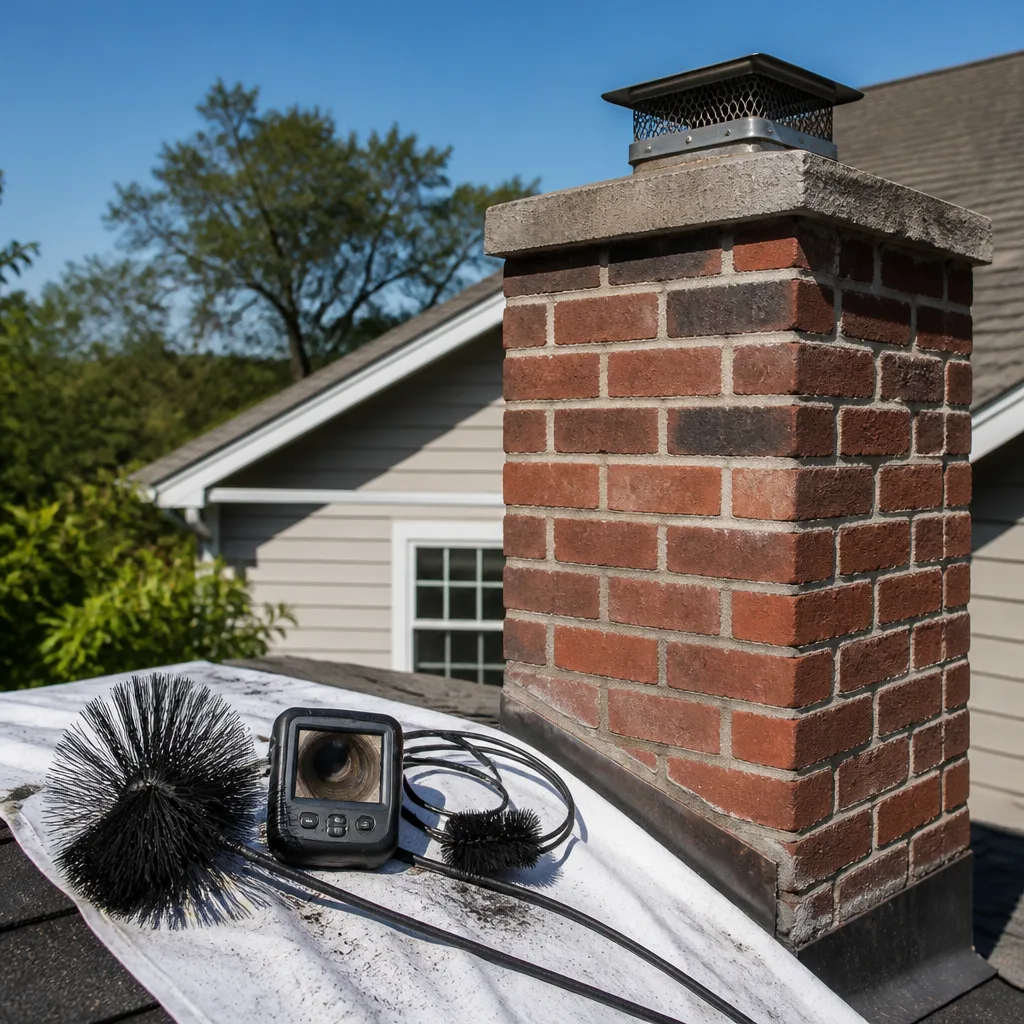 Sweep & inspection
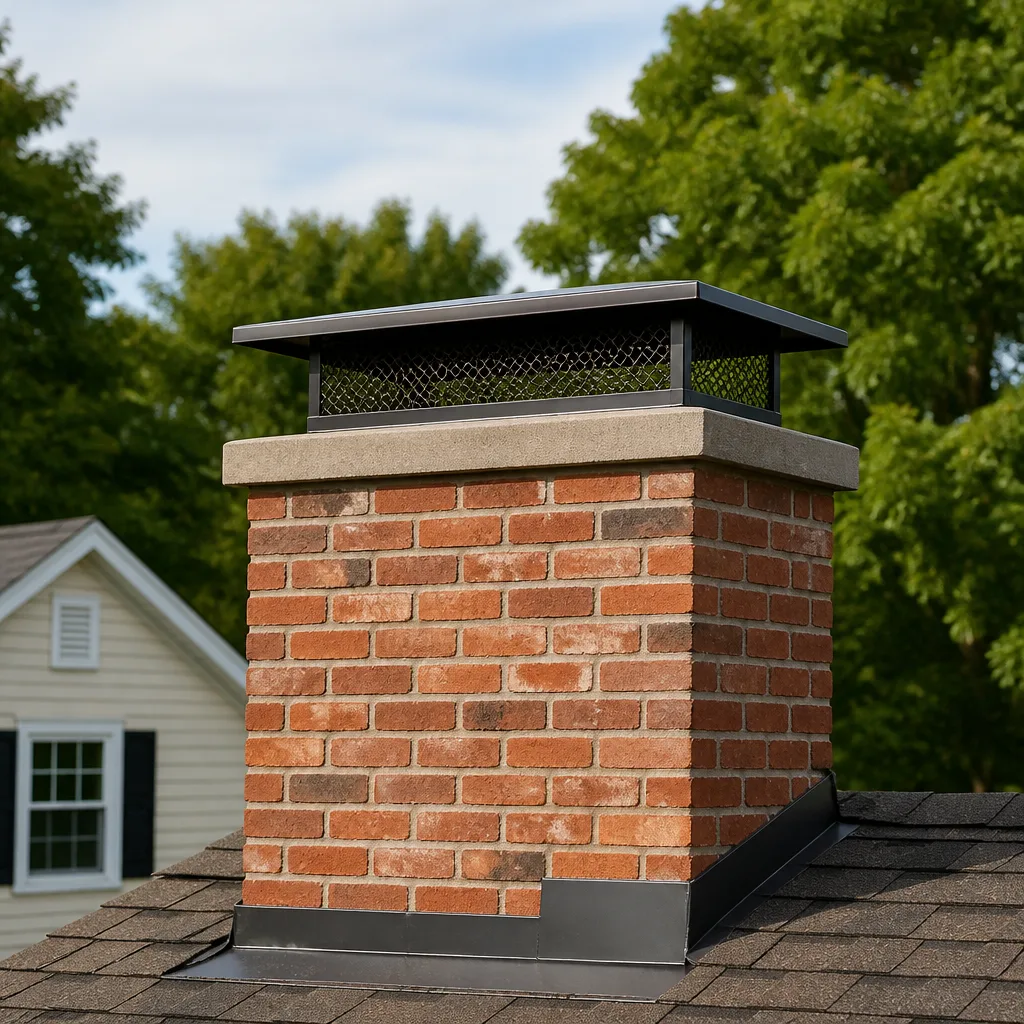 Caps & crowns
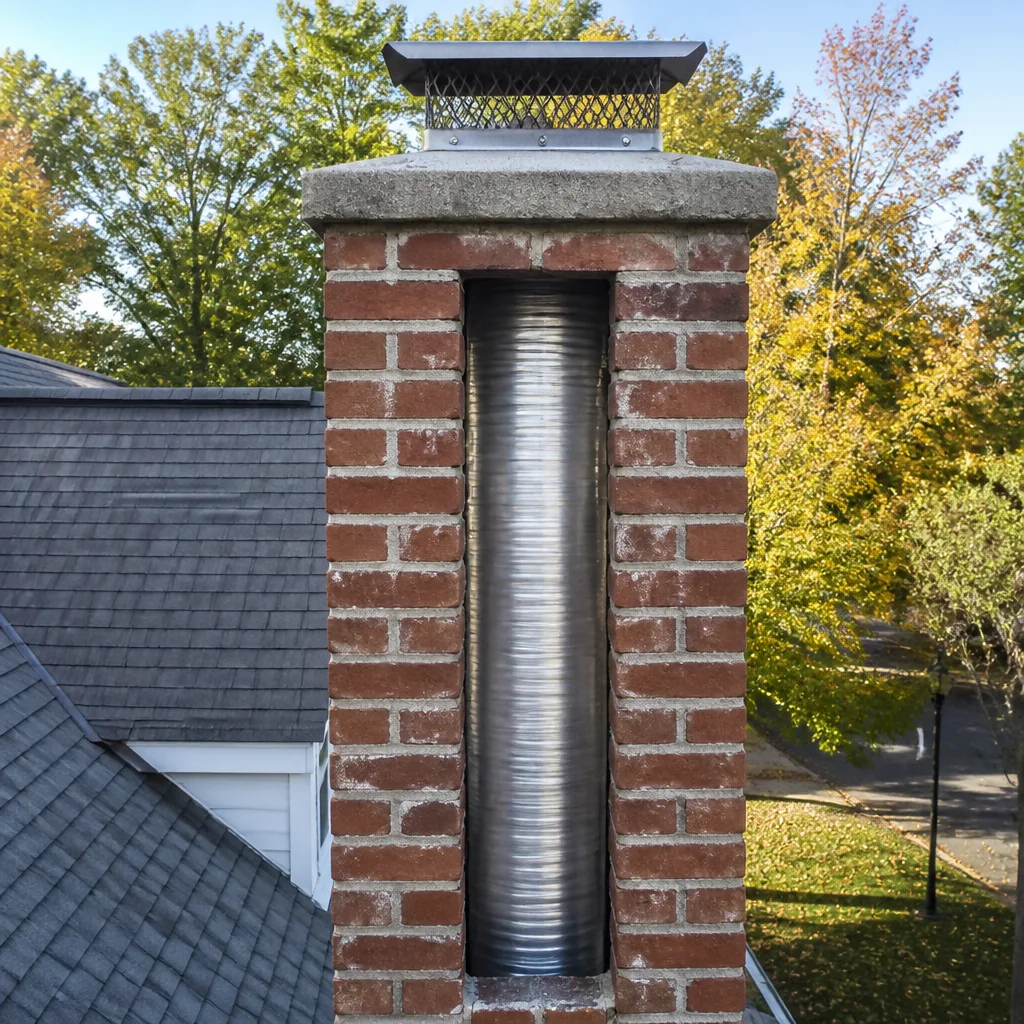 Flue relining
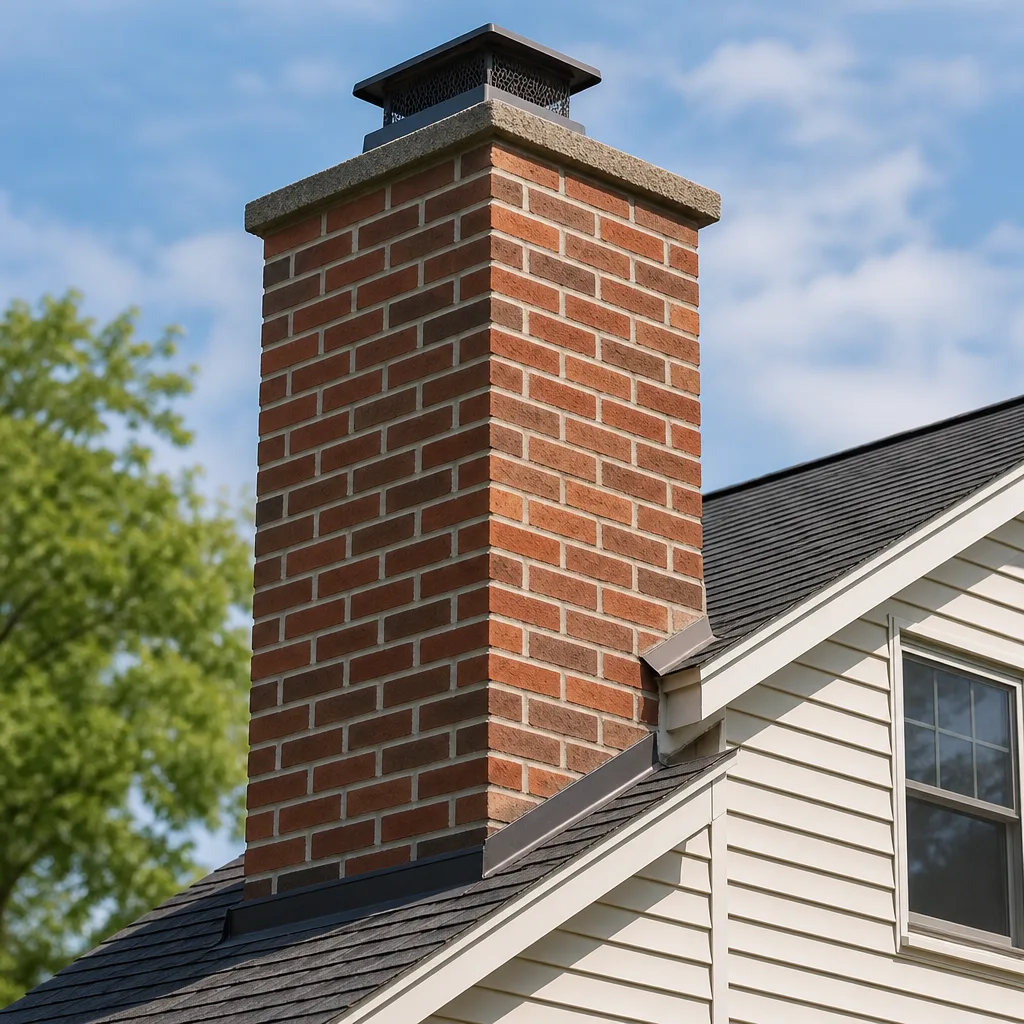 Masonry repair
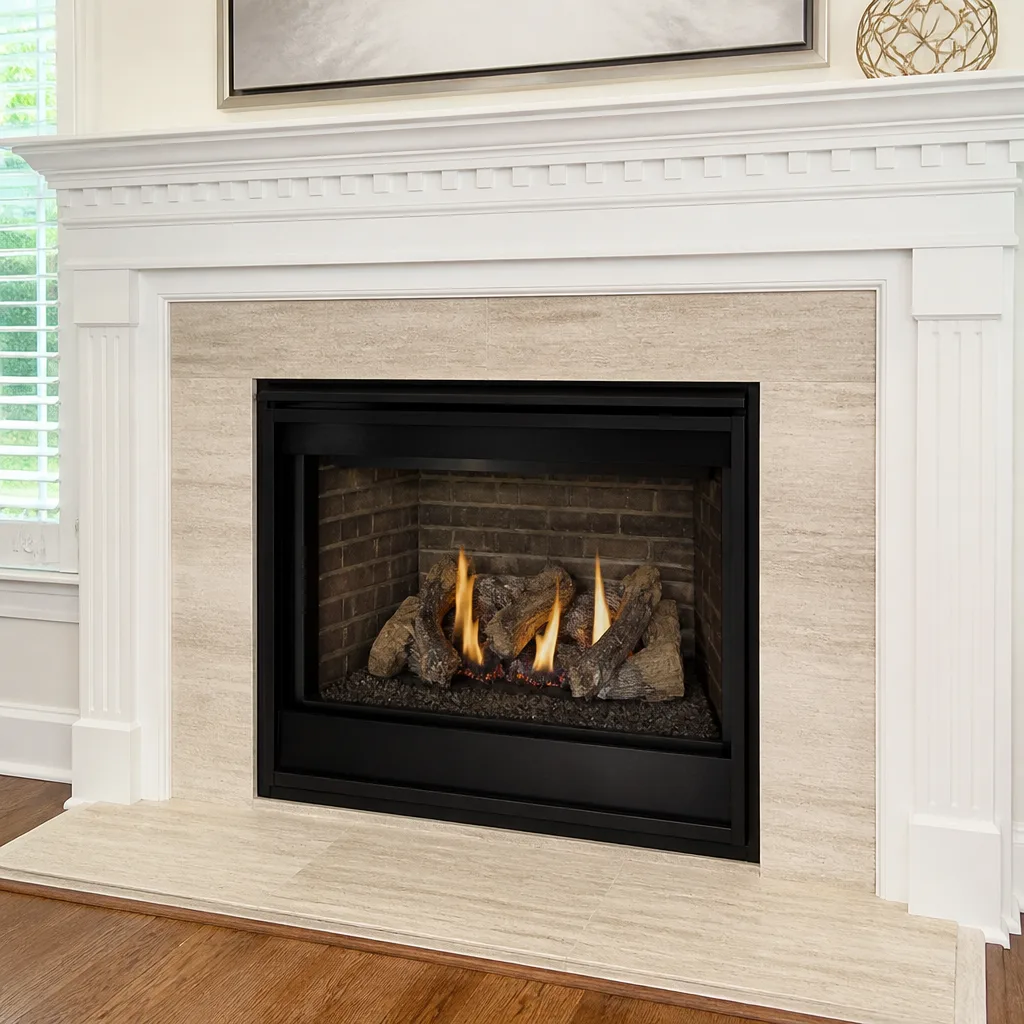 Gas fireplace service
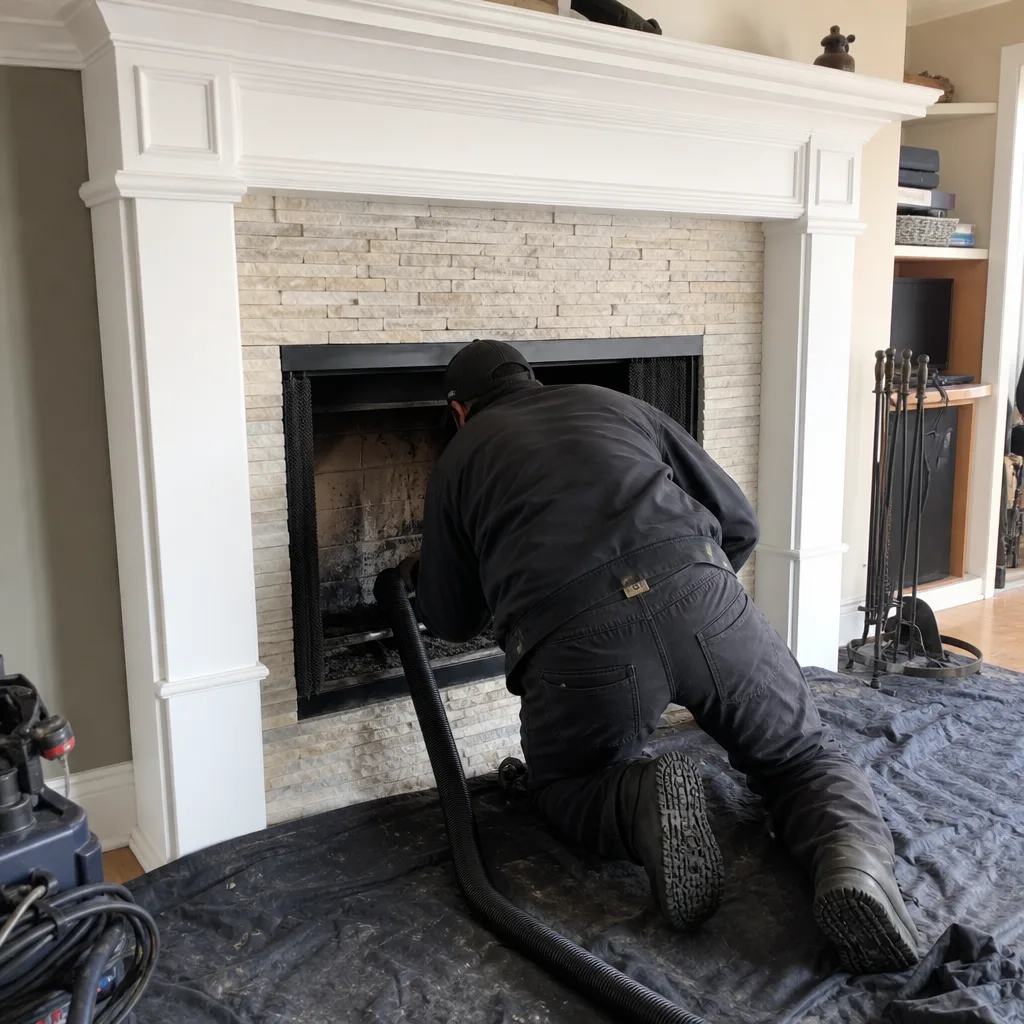
Level 1 sweep and inspection to the NFPA 211 annual standard - flue, crown, cap, and flashing checked and photographed
Chimney sweep logs do not sweep chimneys. They loosen some creosote - which then falls where a brush and vacuum still have to collect it.
Seasonal Chimney Cleaning Care for Alameda: Year-Round Homeowner’s Guide
Alameda’s mild climate is actually harder on chimneys than cold climates. Not because of heat, but because of what happens during the ten months a fireplace sits unused in salt-laden coastal air. Homeowners in Sacramento or Truckee fire up their wood stoves in October and burn steadily through March, which produces a predictable creosote pattern. Alameda is different. People here light a fire on the three chilly, fog-soaked nights in January when the marine layer makes a Victorian on Bay Street feel like an icebox, then let the fireplace go dark for weeks. That irregular, impulse-driven burning is exactly what creates dangerous creosote deposits, and this guide explains how to manage a chimney in a climate that never quite commits to winter.
Styles & brands we work with
- Sweep & inspection
- Caps & crowns
- Flue relining
- Masonry repair
- Gas fireplace service
Quick Answer
Seasonal chimney cleaning in Alameda means scheduling a professional sweep and inspection in late September before sporadic fireplace use begins, then performing a second evaluation in late spring after the fog season ends. Because Alameda’s coastal humidity reacts with existing creosote year-round, an annual inspection should happen even if you burned fewer than ten fires, and chimney cap maintenance should be timed to the nesting patterns of local birds.
Table of Contents
- Why Alameda’s Climate Is Harder on Chimneys Than a Real Winter
- The September Pre-Season Inspection: What It Must Cover in Alameda
- How Coastal Humidity and Salt Air React with Existing Creosote
- Spring Post-Season Tasks for Alameda’s Fog Months (April Through July)
- Chimney Cap and Crown Maintenance on Alameda’s Bird Calendar
- Why Summer Is Alameda’s Secret Weapon for Chimney Service
- Dryer Vent Cleaning Deserves the Same Seasonal Calendar
- Gas Fireplaces Need Seasonal Care Too, Even Without Creosote
- Common Mistakes to Avoid
- When to Call a Professional
- Frequently Asked Questions
- The Bottom Line
Why Alameda’s Climate Is Harder on Chimneys Than a Real Winter
Here’s the counterintuitive part: a chimney that burns hot and often is, in some ways, easier to maintain than one that sits idle. Steady burning through a cold winter keeps creosote deposits from hardening into the glazed, tar-like form that resists brushing. Alameda doesn’t offer that. Instead, the island’s weather pattern, shaped by the San Francisco Bay on three sides, delivers months of high relative humidity, salt-laden fog, and temperature swings that cause condensation inside flues even when no fire is lit.
What does that condensation do? It mixes with whatever creosote already lines your flue from last season’s fires. That moisture activates acidic compounds in the creosote, which accelerates corrosion of the flue liner, whether you have a traditional clay tile liner or a stainless steel system like a DuraFlex liner. We’ve pulled liners from Alameda chimneys that had fewer than two dozen fires on them but showed pitting and flaking that looked like a decade of heavy use. The culprit is rarely the fire. It’s the fog season.
Homeowners on the East End, Bay Farm Island, and the Gold Coast all face the same issue, though homes closer to the water, particularly along Shore Line Drive and Central Avenue corridors, get a heavier salt dose. The salt doesn’t just sit on the outside masonry. It penetrates porous brick and mortar, then migrates inward. When combined with interior flue moisture, the result is spalling brick faces and deteriorating mortar joints that most people mistake for age. In many cases, it’s coastal exposure doing the damage.
For more on how this affects your home specifically, see our guide to Chimney Sweep in Alameda.
The September Pre-Season Inspection: What It Must Cover in Alameda
September is the single most important month on the Alameda chimney calendar. Not October. Not November, when the first real chill finally arrives. By late September, the marine layer pattern shifts, mornings get crisp, and homeowners start thinking about the first fire of the season. That’s the window when a professional inspection should happen, before any fire is lit.
Here’s what a serious September inspection in Alameda should cover, step by step:
- Flue liner evaluation with a camera. A visual check from the top isn’t enough. Alameda’s humidity can cause hairline cracks in clay tile liners that are invisible from the roofline. A camera inspection shows exactly what’s happening inside the flue. If we find localized damage, HeatShield liner restoration can often repair it without a full reline, a repair path many chimney companies in Alameda don’t offer.
- Creosote measurement and removal. Even if you burned only a handful of fires last winter, creosote has had all summer to harden and interact with moisture. A sweep at this stage removes what’s there and gives you a clean baseline for the season.
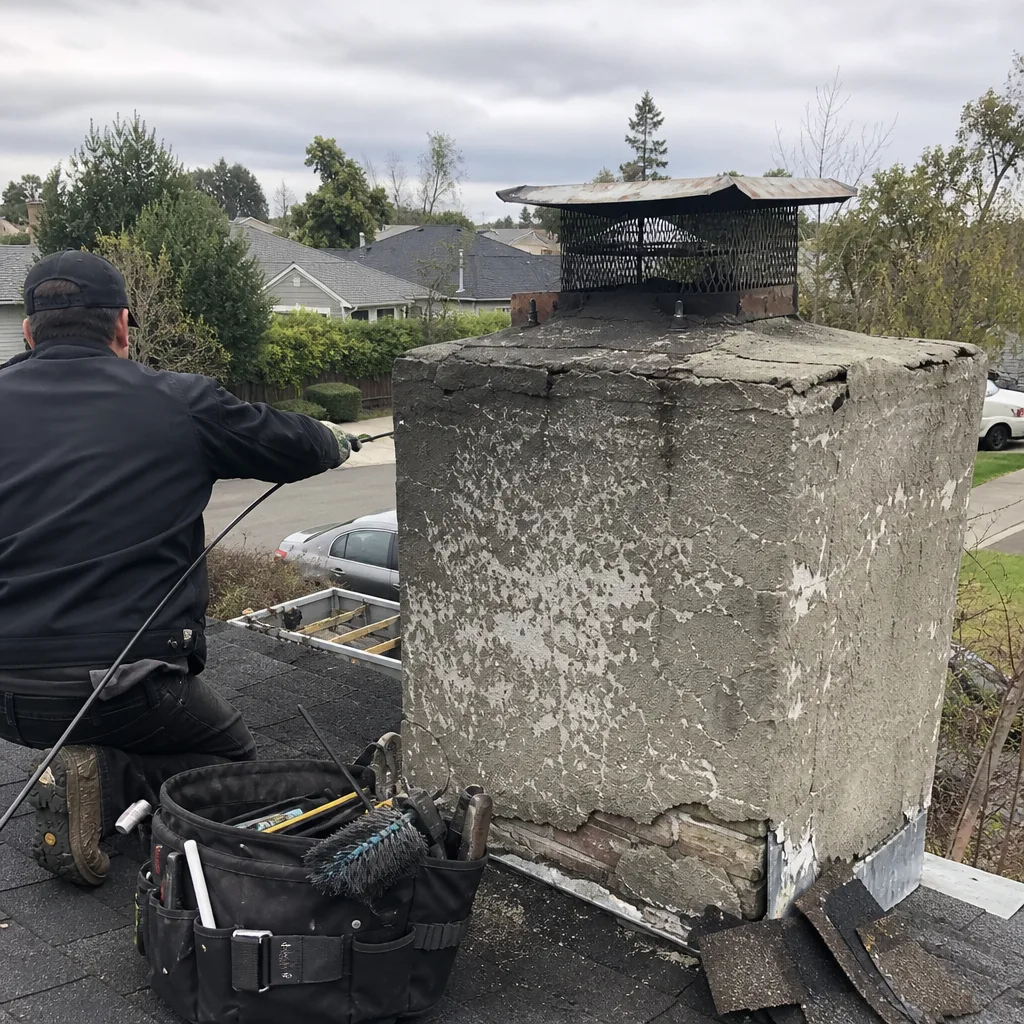
- Chimney cap inspection. Storms off the Bay push debris, salt spray, and rainwater into uncapped or improperly capped flues. A cap that’s shifted or rusted through is a direct path for moisture into the system.
- Crown and mortar joint examination. Alameda’s freeze-thaw cycles are mild compared to the Sierra, but the salt air does its own damage. Crown cracks let water into the chimney structure year-round.
- Damper operation check. The throat damper should open fully and seal completely. A warped damper loses heated air from your home when closed and lets downdrafts in when open.
The goal of a September inspection in Alameda isn’t just to clean. It’s to establish that the system is safe to operate after nine months of coastal exposure. One visit from a Chimney Repair in Alameda specialist can handle both the cleaning and any repair work found, rather than sending you to a separate contractor.
How Coastal Humidity and Salt Air React with Existing Creosote
Creosote is the byproduct of wood combustion: unburned wood particles, tar, and soot that condense on the flue lining as smoke cools. It comes in three stages. Stage one is flaky and brushable. Stage two is crusty and requires more aggressive removal. Stage three is a hard, glazed coating that often requires chemical treatment or mechanical removal. Alameda’s climate has a direct effect on how creosote progresses through these stages.
Here’s the chemistry, explained simply. Creosote is hygroscopic, which means it absorbs moisture from the air. Alameda’s average relative humidity runs between 65% and 80% for most of the summer, with fog events pushing it higher. That moisture reacts with the creosote, breaking down its structure and releasing acids. Those acids eat at the flue liner. This happens whether or not you burn a fire. The creosote is just sitting there, quietly corroding the system.
Salt accelerates the process. Sodium chloride from bay fog settles on exposed masonry and gets pulled into the chimney structure through capillary action. When the salt meets the acidic moisture from creosote, you get a mild chemical reaction that speeds up mortar degradation and metal corrosion. This is why a chimney on Bay Farm Island, three blocks from the water, will often show more rust on its cap and damper than an identical chimney on the East End, half a mile further inland.
What does this mean practically? It means skipping a year of chimney cleaning in Alameda carries more risk than skipping a year in a dry climate. The creosote doesn’t just sit there. It changes. It hardens. It becomes harder to remove and more corrosive to the system. A chimney that would have been a simple sweep in September becomes a chemical treatment or liner repair by the following spring.
Spring Post-Season Tasks for Alameda’s Fog Months (April Through July)
When the last fire of the season goes out, usually in February or March in Alameda, most homeowners close the damper and forget about the fireplace until fall. But in Alameda, the period from April through July is when the chimney takes the most environmental abuse. The fog settles in thick, the humidity peaks, and the salt air works its way into every crack and crevice.
Here’s what should happen after the burning season ends:
- Schedule a post-season evaluation. We recommend a visual inspection after your last fire. This catches damage caused by the season’s burning, including any creosote accumulation that reached stage two or three, before it spends six months soaking in coastal moisture.
- Clean the firebox thoroughly. Remove all ash. Ash left in the firebox through a humid Alameda summer absorbs moisture and becomes mildly caustic, which can damage firebrick and the mortar joints beneath.
- Close the damper and verify the seal. A properly sealed damper prevents fog-laden air from circulating through the flue and into your home. This reduces interior condensation and keeps the flue drier.
- Check the chimney cap after spring storms. Alameda gets consistent spring wind. Debris from eucalyptus and other island trees can wedge into a cap or dislodge it enough to create an opening for birds and rain.
- Address any masonry cracks before July. Small cracks in the crown or mortar joints will only expand through the summer’s dry-wet-dry cycles. Sealing them in spring costs far less than dealing with the damage by fall.
This spring routine matters because Alameda’s fog season creates a perfect environment for moisture intrusion. The damage doesn’t show up in April. It shows up in September, when an inspector finds a flue liner that’s been quietly corroding for five months. Spring attention prevents fall surprises.
Chimney Cap and Crown Maintenance on Alameda’s Bird Calendar
Alameda sits directly on the Pacific Flyway. The island’s trees, shoreline, and protected nesting areas make it a seasonal home for chimney swifts, starlings, and house sparrows, all of which view an uncapped chimney as premium real estate. If you’ve ever heard chirping from your fireplace in March, you know exactly what we’re talking about.
Bird nesting in Alameda runs on a predictable schedule:
- March through early April: Migratory birds return and begin scouting nesting sites. Chimneys without caps or with damaged caps are prime targets.
- May through June: Active nesting. Eggs hatch, chicks grow, and removing a nest during this window is both inhumane and, for many species, a violation of the Migratory Bird Treaty Act.
- July through August: Fledglings leave the nest. This is the safe window for removing nests, installing caps, or repairing damaged ones.
- September: The cap should be fully functional before any burning begins. A nest left in the flue over the summer blocks ventilation and creates a fire hazard the moment a match is lit.
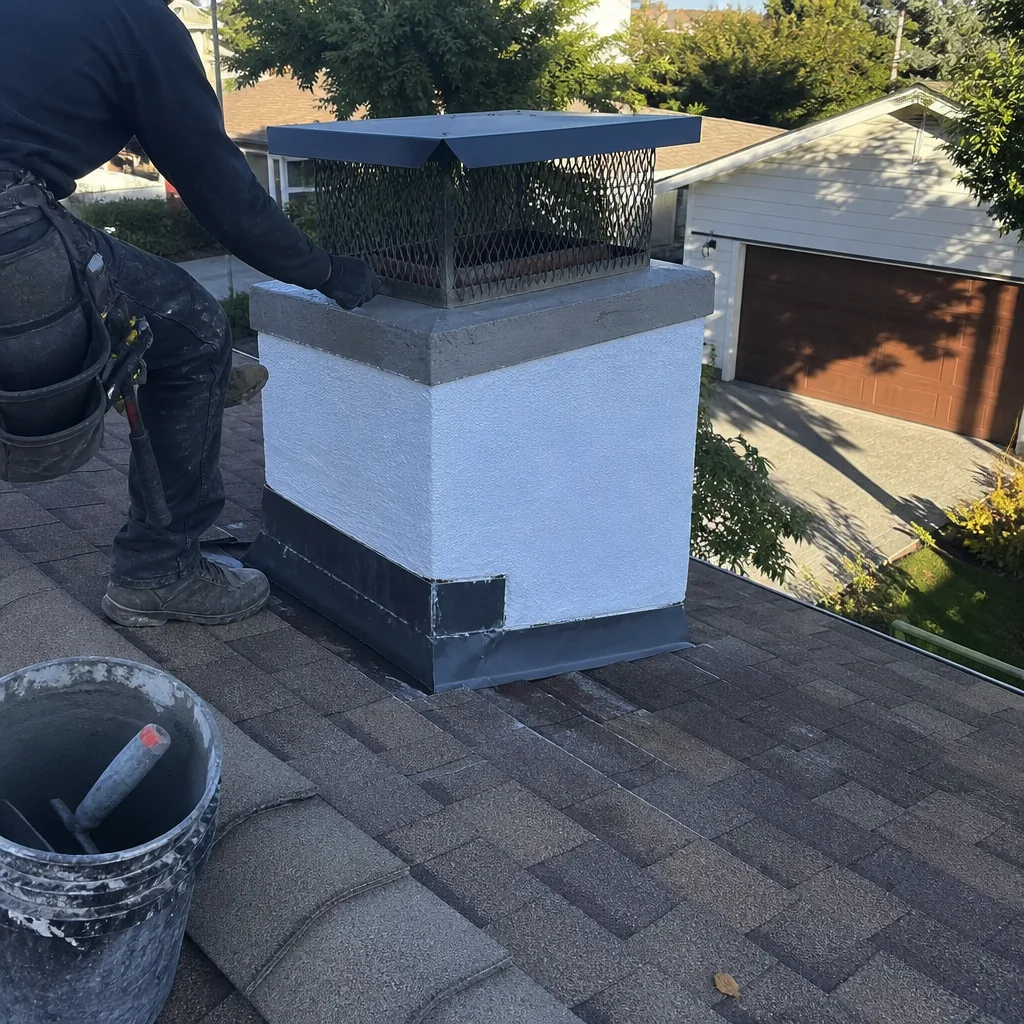
The crown, which is the concrete or stone slab that seals the top of the chimney around the flue, deserves the same calendar attention. Alameda’s wet winters and dry summers cause repeated expansion and contraction. Cracks form. Water gets in. By the time the cracks are wide enough to see from the ground, the internal damage is already underway. We recommend inspecting the crown every September as part of the pre-season check, and resealing or patching whenever cracks exceed a hairline.
Chimney caps from Copperfield and Olympia Chimney, which we stock and install, are engineered for coastal exposure. They resist rust better than generic hardware-store caps and are sized to keep out both birds and the horizontal rain Alameda gets during winter storms.
Why Summer Is Alameda’s Secret Weapon for Chimney Service
There’s an unspoken rhythm to chimney service in the Bay Area. September hits, the first cold snap arrives, and every homeowner on the island calls for a cleaning at the same time. The schedule fills up for weeks. Prices, in some cases, get a seasonal bump. The technician who arrives has been running eight calls a day since mid-October and is thinking about the seven calls still on the board.
Summer service flips that equation. Call for a chimney sweep in Alameda in June or July, and you get your pick of appointment times, unhurried service, and a technician who can spend ten extra minutes examining that suspicious mortar joint without a dispatch board pressuring the schedule. Many companies, including Ambassador Chimney Sweep home services, run seasonal pricing that makes off-season work more affordable.
Summer is also the strategic window for larger repairs. A full reline, crown rebuild, or firebox repair can take a full day or more. Scheduling that work in August means it’s done before the September rush begins. You go into the burning season with a repaired, inspected, and clean chimney, while your neighbors are still trying to get a sweeper on the phone.
And there’s a climate benefit too. Alameda’s summer is the driest stretch of the year, which means any masonry sealing work done in July or August has ideal conditions for proper curing. Sealant applied in fog-heavy October doesn’t set as reliably. The same repair done in August bonds better and lasts longer.
Our recommendation: make the summer inspection an annual habit. Think of it as the chimney equivalent of changing your furnace filter before heating season, a simple, scheduled task that prevents the expensive problem later.
Dryer Vent Cleaning Deserves the Same Seasonal Calendar
While we’re talking about seasonal maintenance, the dryer vent deserves a spot on the calendar too. Lint accumulation in dryer vents is one of the leading causes of residential structure fires in the United States, and Alameda’s older housing stock adds an extra layer of risk. Many of the island’s homes, particularly the Victorians and bungalows built between 1900 and 1950, have long, twisting dryer vent runs that pass through walls or crawlspaces. Those runs are lint traps by design.
Here’s the Alameda-specific recommendation for dryer vent cleaning:
- Clean the vent annually at minimum. If you have a long vent run, a gas dryer, or a household that does five or more loads per week, every six months is safer.
- Schedule it in spring. After the winter’s heavier laundry loads from sweaters and layers, lint has had its biggest accumulation season. Spring cleaning removes it before summer’s dry heat makes any lint buildup a higher fire risk.
- Pay attention to drying time. If a load that used to dry in 45 minutes now takes 70, that’s not a failing dryer. That’s a restricted vent. Don’t wait for the annual cleaning to address it.
Our Dryer Vent Cleaning in Alameda service uses professional-grade equipment to clear the full vent run, not just the accessible section behind the dryer. We remove the lint, verify the exterior vent flap operates correctly, and confirm the system is safe.
Gas Fireplaces Need Seasonal Care Too, Even Without Creosote
Many Alameda homes have gas fireplaces or gas log sets installed in what were originally wood-burning fireplaces. The assumption is that no wood means no creosote means no cleaning. That assumption is wrong in ways that matter for safety.
Gas fireplaces produce water vapor as a combustion byproduct, along with trace amounts of sulfur and other compounds from the gas supply. Over a season of use, those byproducts condense on the flue walls, firebox panels, and gas logs. The result is a white, powdery, or crusty buildup that most homeowners mistake for harmless dust. It’s actually mildly acidic and corrosive.
In Alameda, the same coastal humidity that attacks creosote also interacts with gas fireplace residue. The moisture in the air keeps the buildup damp and chemically active for longer stretches, which accelerates corrosion of metal components, including the burner assembly, log grate, and damper hardware.
Gas fireplace seasonal care in Alameda should include:
- A visual inspection before the first fall use. Check the burner, logs, and firebox for any unusual residue, cracking, or corrosion.
- Annual professional inspection and cleaning. A technician checks gas connections, verifies proper flame color (blue, not yellow or orange), and confirms the venting system is clear.
- Carbon monoxide detector verification. Any home with a gas appliance, including a fireplace, should have a working CO detector on every level. Test it when you test smoke alarms.
Gas fireplaces are convenient, and that convenience leads to more frequent use, which means more combustion byproducts entering the chimney. The annual inspection applies even if you use the gas fireplace only a handful of times.
Common Mistakes to Avoid
- Assuming a mild winter means a clean chimney. Alameda’s humidity does more damage to an idle chimney with residual creosote than a cold winter does to a chimney that burns regularly. Skip the cleaning because you “barely used it,” and you’re inviting corrosion.
- Waiting until October to schedule. By the time Alameda’s first real chill hits, every reputable chimney company in the Bay Area is booked out. Schedule in September, or better yet, do your inspection in summer when availability is wide open.
- Closing the damper and forgetting about the chimney for eight months. The fog season is the most destructive period for an unchecked chimney. Post-season inspection and spring maintenance prevent fall surprises.
- Removing a bird nest at the wrong time. Active nests are legally protected. If you hear birds in your chimney in spring, wait until the fledglings leave in late summer before removing the nest and installing a proper cap.
- Treating the chimney cap as optional. An uncapped flue in Alameda takes on rainwater, salt spray, debris, and birds. A proper cap from a brand like Copperfield is not an accessory. It’s a required component.
- Ignoring the dryer vent because it’s “just lint.” Lint is the fuel, and a restricted vent is the ignition source. Clean it annually, more often in older Alameda homes with long vent runs.
- Assuming a gas fireplace needs no service. Gas fireplaces produce corrosive residue that coastal humidity keeps chemically active. Annual inspection applies regardless of fuel type.
When to Call a Professional
Some chimney tasks are safe to handle yourself: keeping the firebox clear of ash, checking the damper for obvious warping, looking up at the cap from the ground after a storm. Others are not. Any inspection that requires getting on a roof, examining a flue interior, or evaluating structural integrity should be left to a trained professional. The same goes for gas line connections, which are dangerous to disturb without proper training. If you notice any of the following, schedule service immediately: visible smoke entering the room during a fire, a strong odor coming from the fireplace in summer, crumbling mortar falling into the firebox, or persistent drafts even with the damper closed. Ambassador Chimney Sweep offers free estimates in Alameda, call (877) 752-4931.
Frequently Asked Questions
At least once per year, ideally in September before the first fire of the season. Alameda’s coastal humidity affects creosote even when the fireplace is unused, so an annual sweep is the minimum regardless of how often you burn. If you use the fireplace more than 30 times per season, or if you burn unseasoned wood, twice per year may be necessary. Call (877) 752-4931 for an assessment of your specific burning habits.
A standard chimney sweep and inspection in Alameda typically ranges from $180 to $350 depending on the chimney’s condition, height, and accessibility. Homes on Bay Farm Island or the Gold Coast with multi-story rooflines may cost more. Additional work like camera inspections or HeatShield liner restoration is quoted separately after the initial findings. Call (877) 752-4931 for an exact quote, estimates are free.
No, gas fireplaces don’t produce creosote, but they do produce corrosive residue that should be addressed annually. The inspection focuses on burner condition, venting, gas connections, and the removal of acidic buildup that Alameda’s humidity keeps chemically active. Annual service applies to gas fireplaces regardless of use frequency.
Skipping a year in Alameda is riskier than in a dry climate because the coastal air reacts with whatever residue is already in the flue. Even a small amount of creosote left over from last season becomes more acidic and more corrosive during the humid months. The inspection is cheap insurance against liner damage that costs significantly more to repair.
Summer, from June through August, is the ideal window for repairs. The dry weather allows masonry sealants to cure properly, the schedule is more flexible, and off-season pricing is often lower. The work is done before the September rush, so you enter the burning season with a repaired, inspected system.
That musty, smoky odor in summer is a sign of moisture in the flue mixing with creosote residue. The fog-heavy months create condensation inside the chimney, which activates the odor. A professional cleaning and a check of the chimney cap and crown usually resolves it, and the Chimney Repair in Alameda team can address any moisture entry points found during the inspection. Call (877) 752-4931 to schedule.
The Bottom Line
Alameda doesn’t have a winter, and that’s exactly why chimney care here requires its own playbook. The same coastal humidity and salt air that makes the island pleasant to live in accelerates chimney deterioration in ways that cold-weather climates don’t experience. The solution is simple: one pre-season inspection in September, one post-season check in spring, and strategic use of the dry summer months for repairs and maintenance. Add the dryer vent to the same calendar, and you’ve covered the two most common ignition sources in the home. Built around the island’s specific climate patterns, this year-round approach keeps your chimney safe, efficient, and ready for that first foggy-night fire whenever it arrives.
Written by the team at Ambassador Chimney Sweep, serving Alameda since 2014.
See the difference
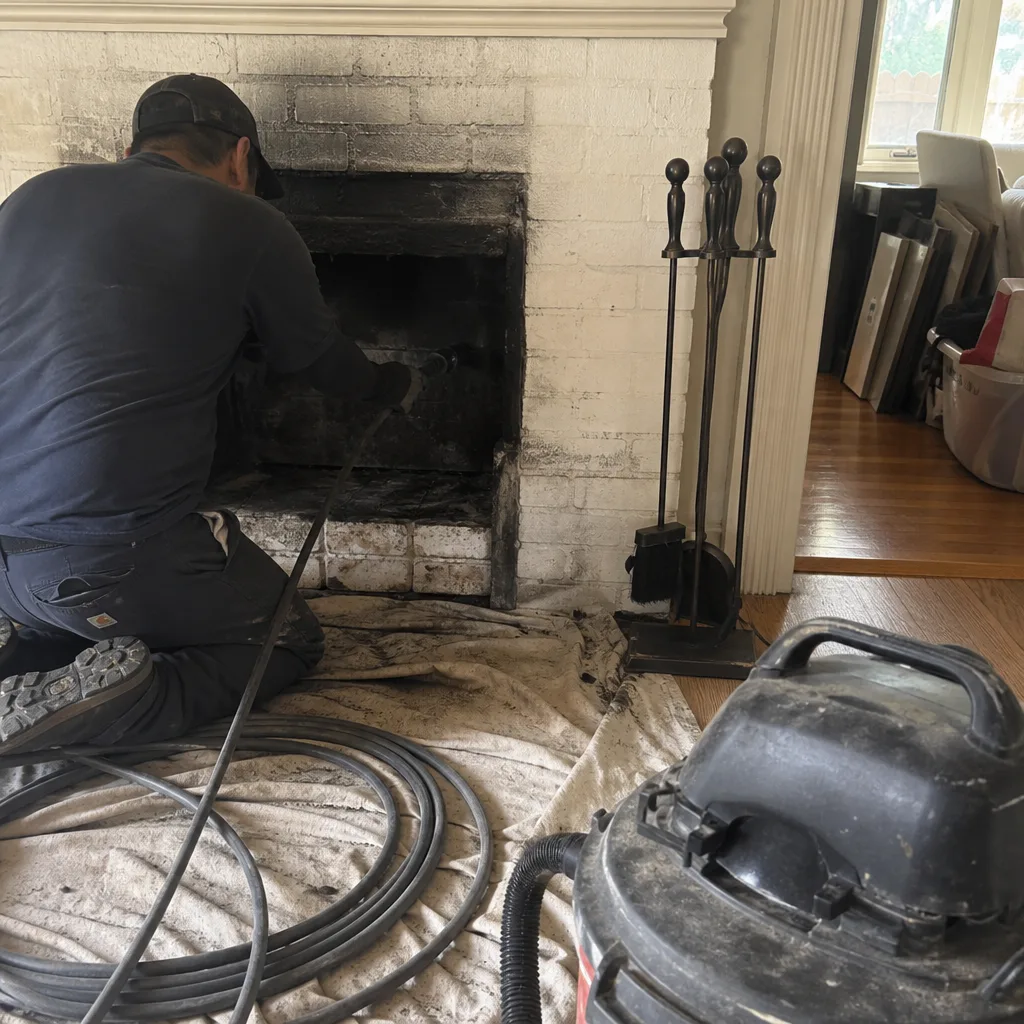 Before
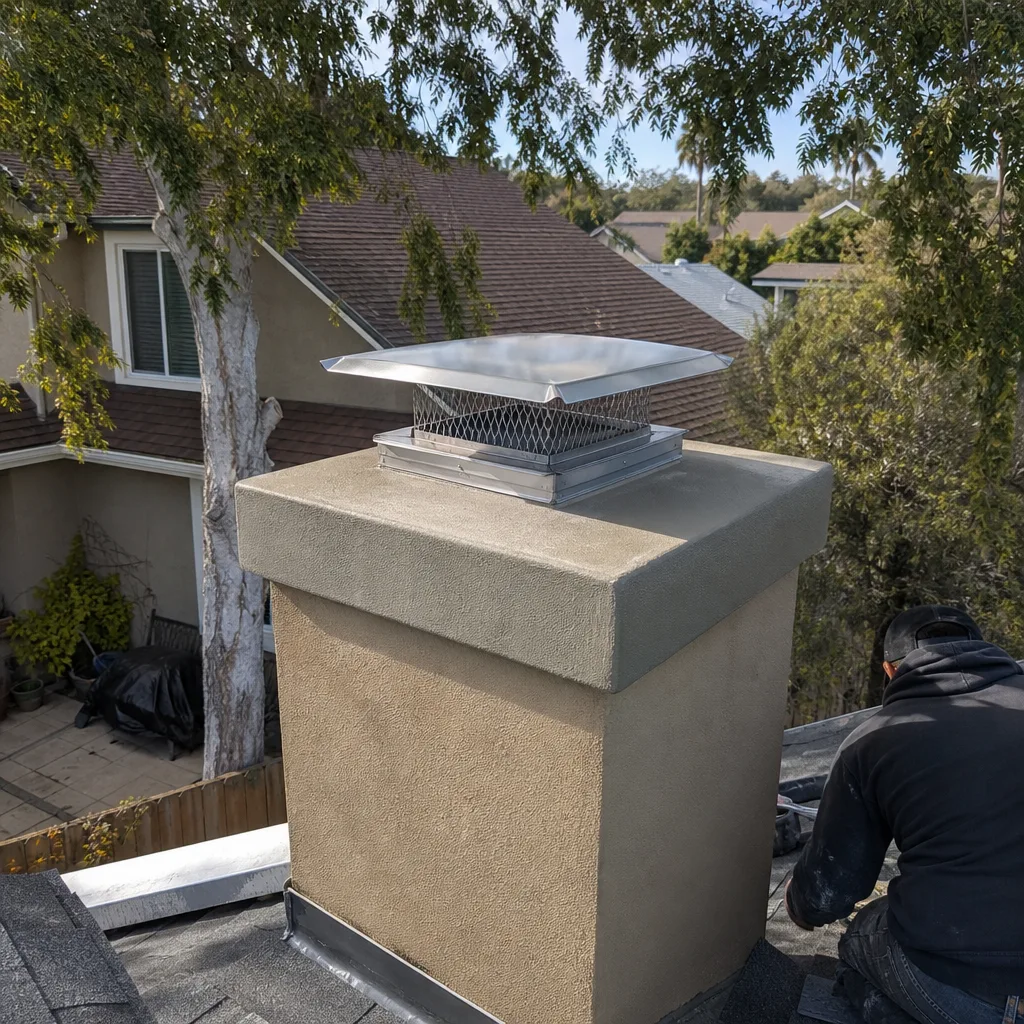 After
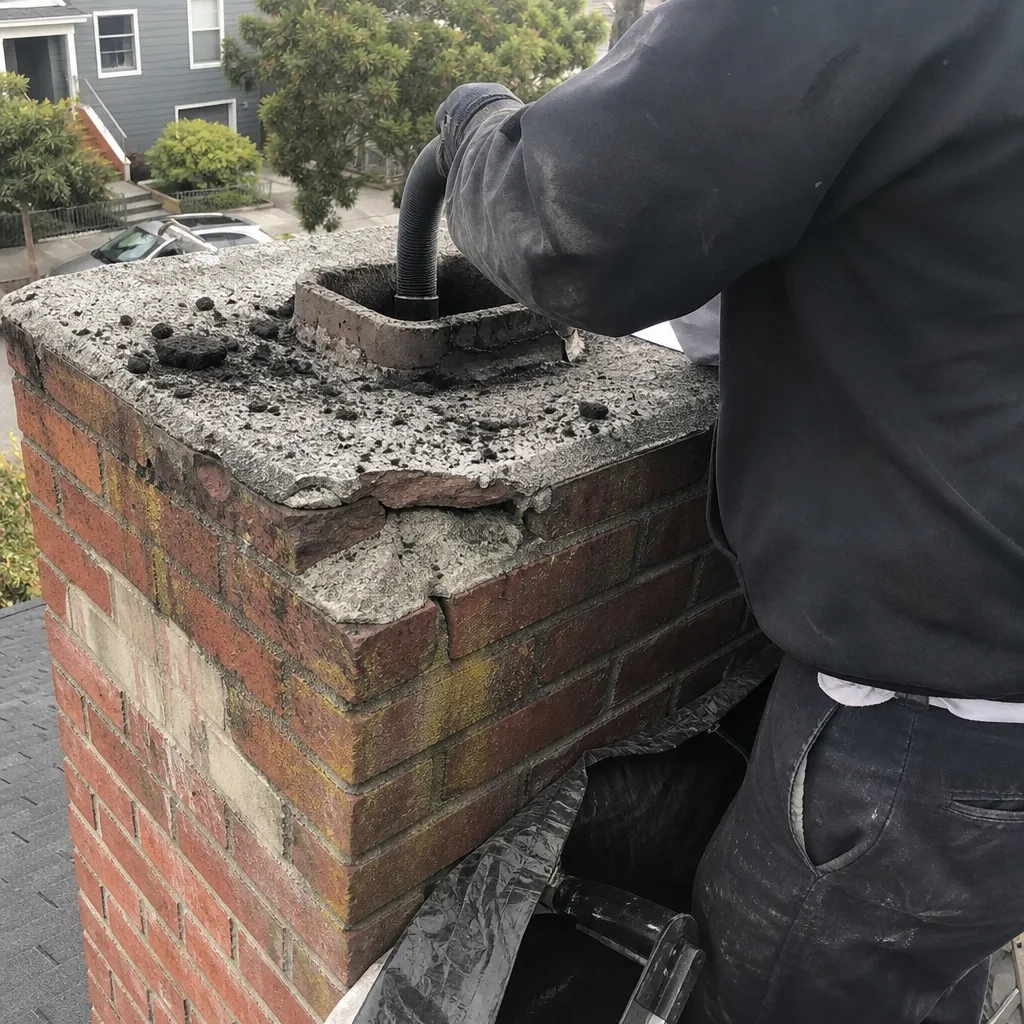 Before
 After
 Before
 After